- No Products In The Cart
- start shopping



House of Stoves • Advice & inspiration
How to Choose an Electric Fire: Inset, Wall-Mounted, Stove or Media Wall
Buying guide reviewed by House of Stoves on .
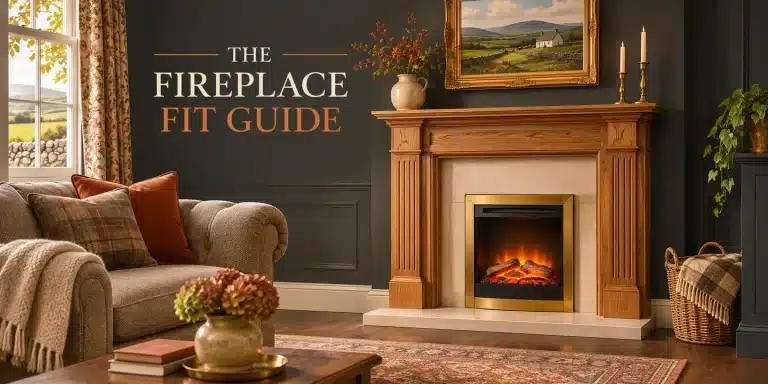
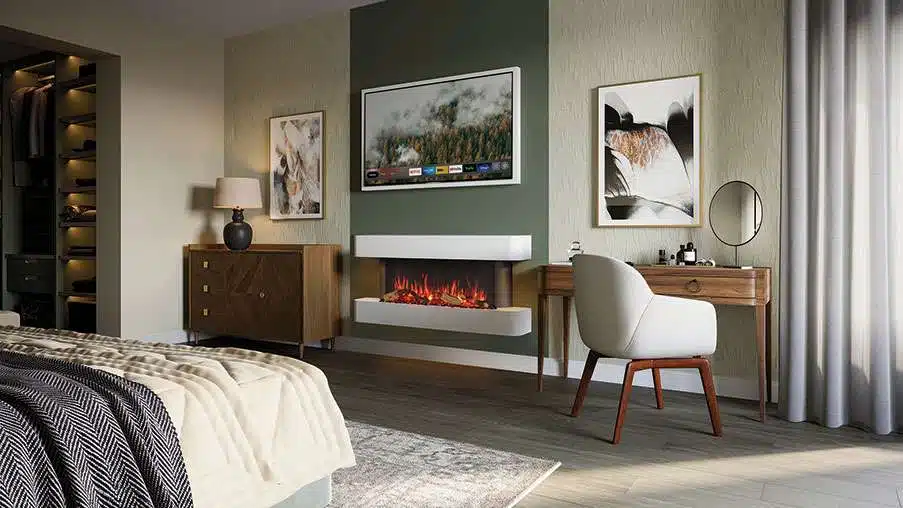
Choose an electric fire by installation type first: inset for an opening, wall-mounted for a surface feature, a stove for a freestanding stove-style look, or a suitable built-in model for a media wall. Then compare the visible flame, appliance depth, controls and heating requirements.
Which electric-fire type suits your room?
| Type | Why shortlist it? | What to check |
|---|---|---|
| Inset electric fire | A fitted look within a suitable fireplace or prepared opening. | Exact opening dimensions, depth and fitting instructions. |
| Wall-mounted electric fire | A feature fixed to a wall without a full recessed build. | Projection into the room, mounting requirements and cable route. |
| Electric stove | A stove-shaped focal point in a fireplace, snug or sitting room. | Body dimensions, clearances and heater airflow. |
| Built-in media-wall fire | A planned feature combining the fire with a TV or cabinetry. | Recess specification, viewing sides, ventilation and service access. |
These descriptions can overlap: some models allow more than one fitting arrangement. Buy on the exact model’s approved installation options, not a category name alone. Our electric fires and stoves range lets you compare the available formats.
Decide how you want the flame to look
Compare the visible opening, log or crystal bed, flame movement and lighting in a room setting. Check a demonstration where possible. A wide fire is a design choice; it does not automatically provide more heat than a narrower one.
Decide whether you want a front-only view or a model designed to expose one or both sides. Side glass and the wall’s finished returns change the appearance considerably, so plan them before construction.
Lumo at House of Stoves
Lumo electric fires are our own-brand option for customers planning a fireplace or media-wall feature. The Lumo Comfort 150 is one example to shortlist if illuminated logs and a front-facing inset look appeal. Compare its actual dimensions and fitting instructions with your room rather than choosing from a photograph alone.
Compare the look with Dimplex electric fires and the wider HOS range. The aim is a fire you enjoy looking at, with controls and an installation that suit your home.
Separate ambience from heating
Check whether the chosen model has flame-only operation, which controls are included and how the heater is rated. Remote, app and thermostat functions vary by model. Do not assume that every electric fire has the same features or can serve as a home’s main heating system.
Use our electric-fire running-cost guide to calculate example costs from power, operating time and your own electricity unit rate. Flame-only electricity use also varies; it should not be described as free.
What should I check before buying?
- Measure the available wall or fireplace width, height and depth.
- Check the exact appliance dimensions separately from the required recess.
- Confirm mounting, electrical supply, airflow and access requirements in the manual.
- For a TV above the fire, follow both manufacturers’ instructions; there is no universal safe gap.
- Compare the complete project cost, including fitting and finishing.
Common electric-fire questions
Does an electric fire need a chimney?
An electric fire does not burn fuel and does not need a combustion flue. Its mounting, electrical connection and ventilation requirements still need to be followed.
Can every wall-mounted fire be recessed?
No. Only recess a model where its instructions expressly allow that arrangement. A hang-on-wall design and an inset design can have different requirements.
Can I install an electric fire below my TV?
Check the exact fire and TV instructions before planning the build. Our media-wall planning guide explains which measurements and documents to gather.
Your next step
Shortlist two or three fires from the HOS electric range, then ask our team to compare them for your room. For background on flame technologies, read Dimplex’s explanation of how electric fires work.